CURRENT EXHIBITION
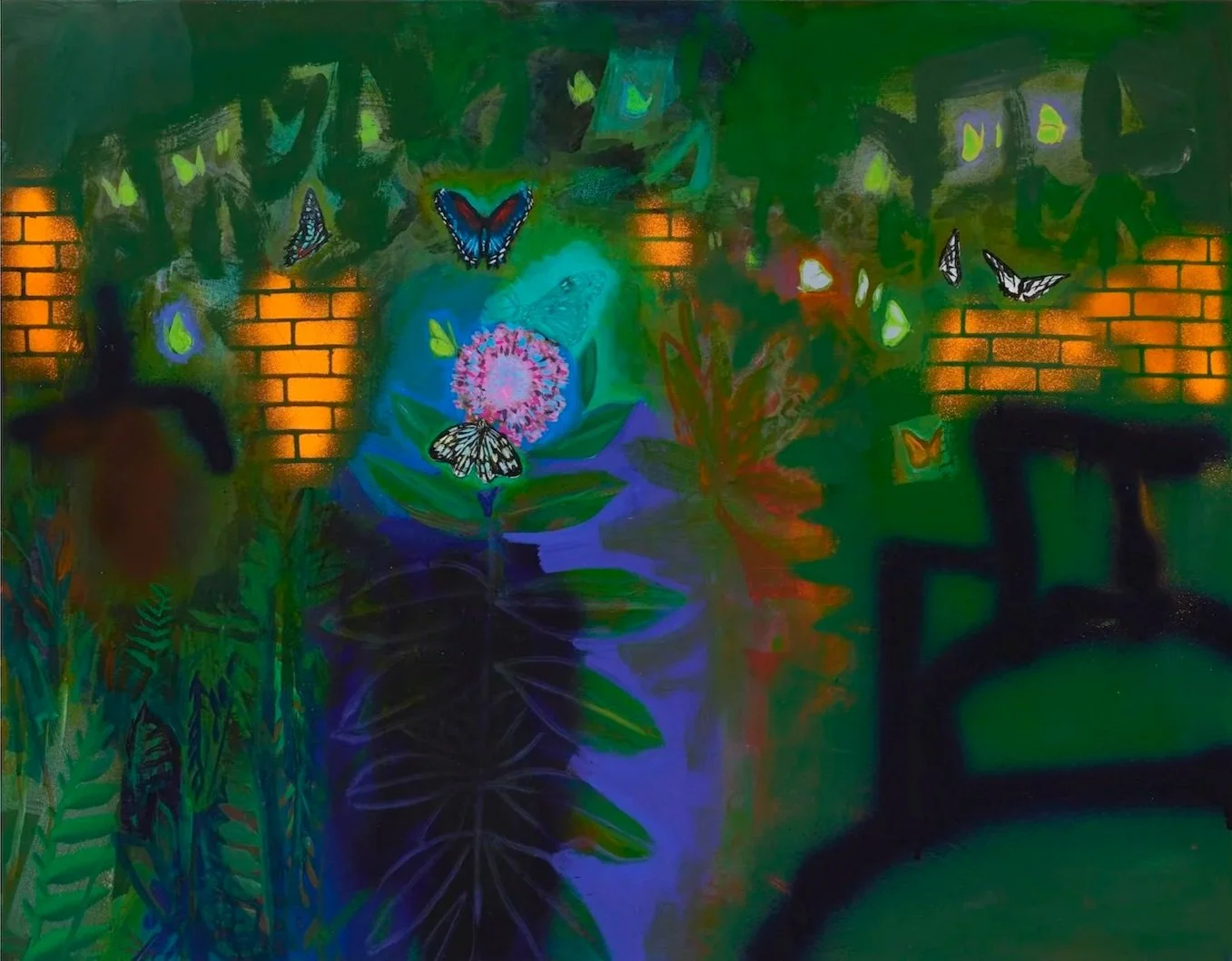
ANILINE SKY
June 6 - July 5, 2026
works by Jennifer Coates
In Walt Whitman’s 1856 poem, This Compost, he describes humanity’s relationship to the environment as one of awe and bewilderment: It grows such sweet things out of such corruptions, he writes. This sentiment underpins the work of Jennifer Coates, whose recent exhibition at Tyler Park Presents drew its title from Whitman’s poem. Her new exhibition, Aniline Sky, at 1053 Gallery in Fleischmanns, continues to wrestle with this tension.
Aniline is a fascinating enigma of the Industrial Age: it’s a chemical compound derived from coal tar runoff and synthesized to prevent infection; it’s also a brilliant purple fabricand hair dye. Coates’ paintings sing with the same polarity of transcendence and decay endemic to contemporary life. The jewel-toned hues of her works speak to the expanded awareness of a psychedelic experience and the otherworldly tones of chemical toxicity. Similarly, the wishing trees springing up in the middle of the forestrepresent both a sacred offering and the evidence of human detritus.
Coates' process mirrors the environment she depicts. Working between her homes in Brooklyn, New York, and rural Pennsylvania, she treats painting as a form of sacredoffering. Dozens of layers accumulate on her canvases like geological formations, only to be worn away in parts like sediment carried by the elements. Her mystical abstractions rely on automatism as the primary guide for her mark-making. At one point in her artistic journey, landscapes spilled into form and pattern to become amorphousdinner parties. Painting became a synesthetic experience; she didn’t stop until she could taste the color and texture of the paint. She began painting processed food with acrylics, treating them as shrines and creating shape-rhymes of candy bar cross-sections and exaggerated pasta shapes.
This new body of work represents a shift in focus to her immediate surroundings: the plants of her garden, the encroaching wilderness, and her interest in abandoned coal industry sites hidden in the woods. She used to think of weeds as a rebuke, she says, a glaring symbol of her lackadaisical garden upkeep, but now she reveres these organisms for their medicine. Dandelions, yew, milkweed, and irises appear alongside birds, cryptic figures and brick facades.
Coates’ deepening interest in art history also filters through the work. She draws heavily upon ancient Roman and Pompeiian frescoes, which brought the natural world into indoor landscapes by mixing species that wouldn’t naturally co-mingle. In these ancient works, specimens were depicted as if they’d been pressed rather than observed firsthand—a compositional flattening that reappears in Coates' rarely seen mixed-media collages. These works on paper reveal her process through cuts and disruptions to thepicture plane, where botanical and figurative elements arise out of negative space.
Ornamentation in her paintings is further derived from the pagan tradition of wishing trees, where ribbons and objects are hung from branches. Coates, who is English, was inspired by trees she encountered in Cornwall near healing wells. As she paints, she brings her own offerings to the well and trees on her land. Lurking, cryptic figures enter her compositions as altar statuary and spirits called to these trees. Cobalt blue features heavily in her palette—also a nod to the word's German meaning, underground goblin.
She’s equally inspired by the haunting quality of stumbling upon human relics in theforest, almost like a lost language. Coates is no stranger to language—she writes song lyrics, art reviews, and once moonlighted as Kittie Shimski, creating horoscopes for painters for Two Coats of Paint. She leads us in and out of the poetic dramas of her flickering picture planes with the deftness of an auteur. Her mark-making practice becomes its own form of communication and a reflection of the legacy we leave behind; graffiti and grown-over concrete become contemporary America’s glyphs and temple ruins, charged with the energy of post-industrial pilgrims.
This exhibition showcases the dynamism of Coates’ oeuvre, which stands as an homage to the essence of life where extraordinary experiences converge with the quotidian in vertiginous compositions that seem to ask: can that which is wild continue to coexist with the cultivated? It’s often said that the body keeps the score. So does the land. We might be nostalgic for a time woven into our DNA that we can only glimpse. These patterned color fields provide a momentary relief, seemingly stating, We can rest here.
Lindsay Comstock
EXHIBITION WORKS
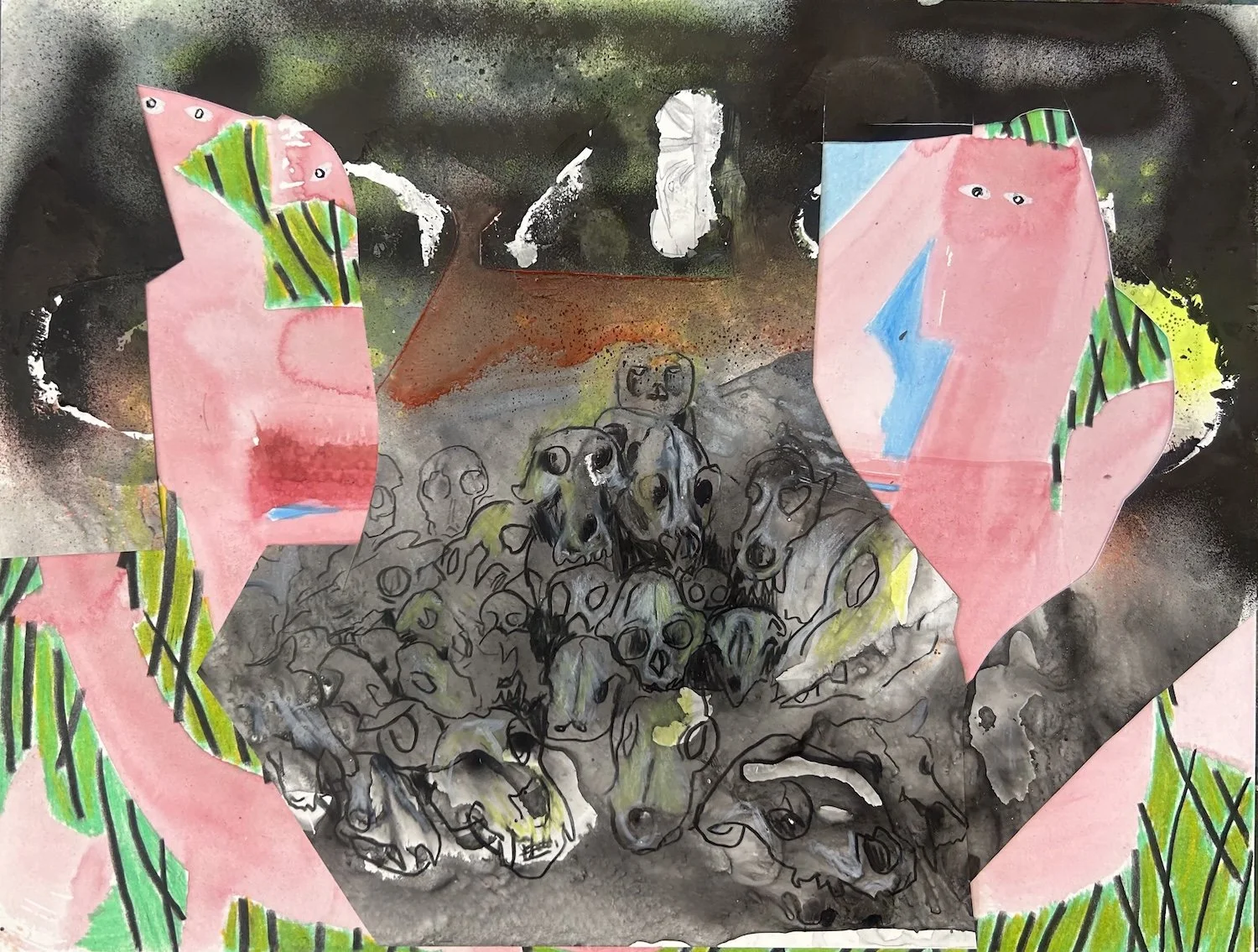
Ossuary with Watchers | mixed media | 9 by 12 inches | 2026
Ruin, Milkweed, and Butterflies | 22 by 30 inches | 2026

Cave of Hypnos | colored pencil | 9 by 12 inches | 2023

Forest Walkers | mixed media on yupo | 9 by 12 inches | 2024
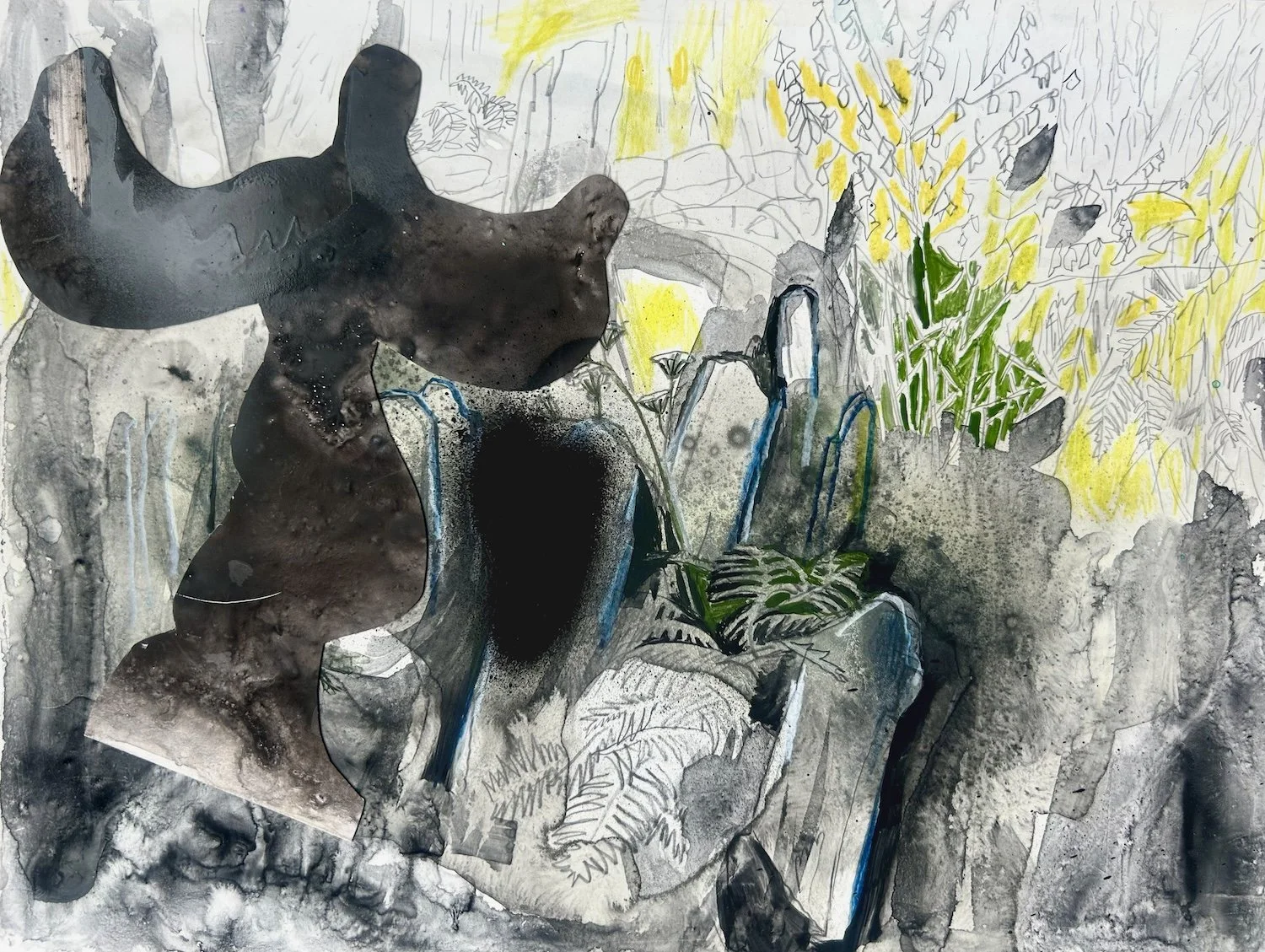
Sculpture and Graveyard | mixed media on yupo | 9 by 12 inches | 2026
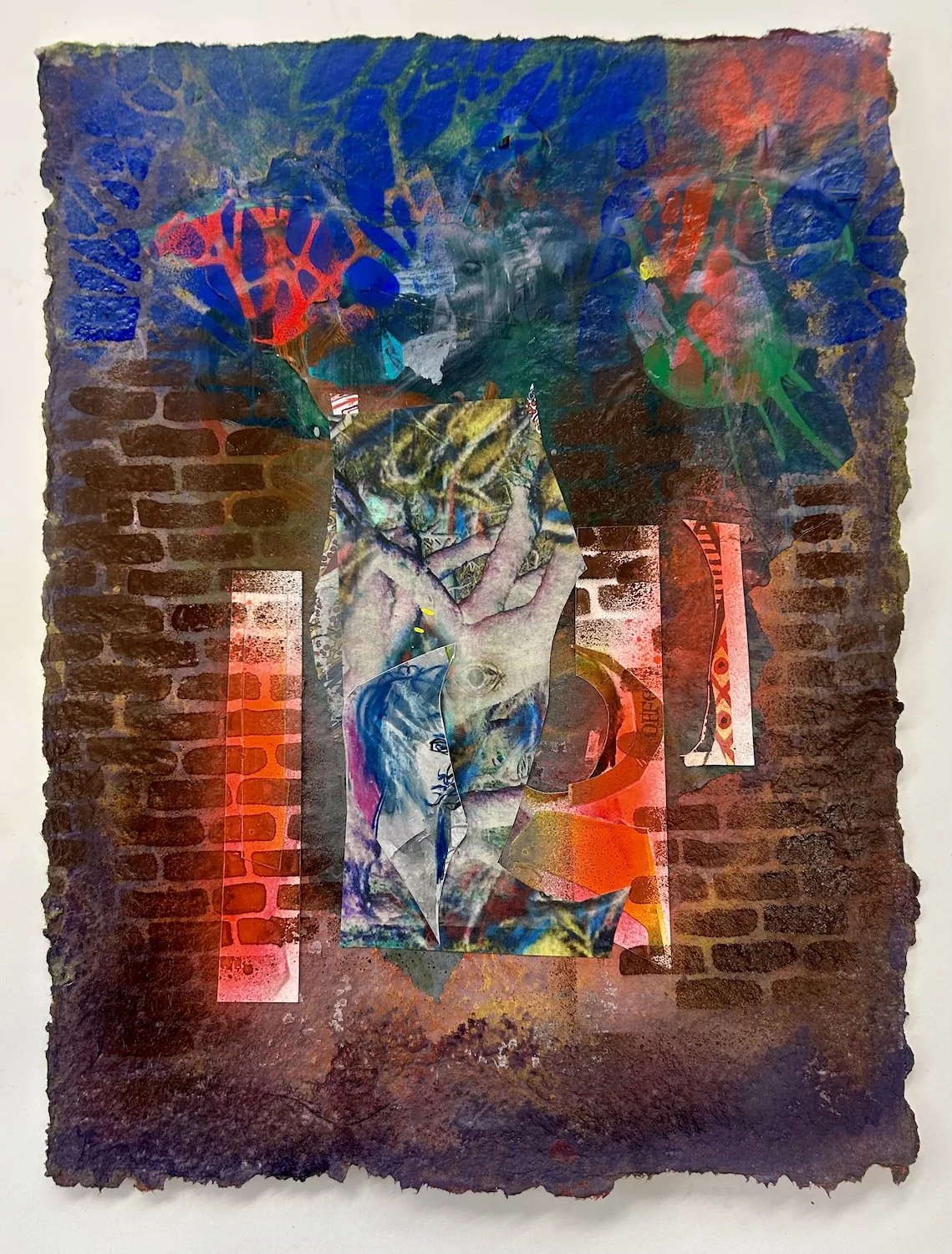
Wall with Trees and Eyes | mixed media | 12 by 9 inches | 2026
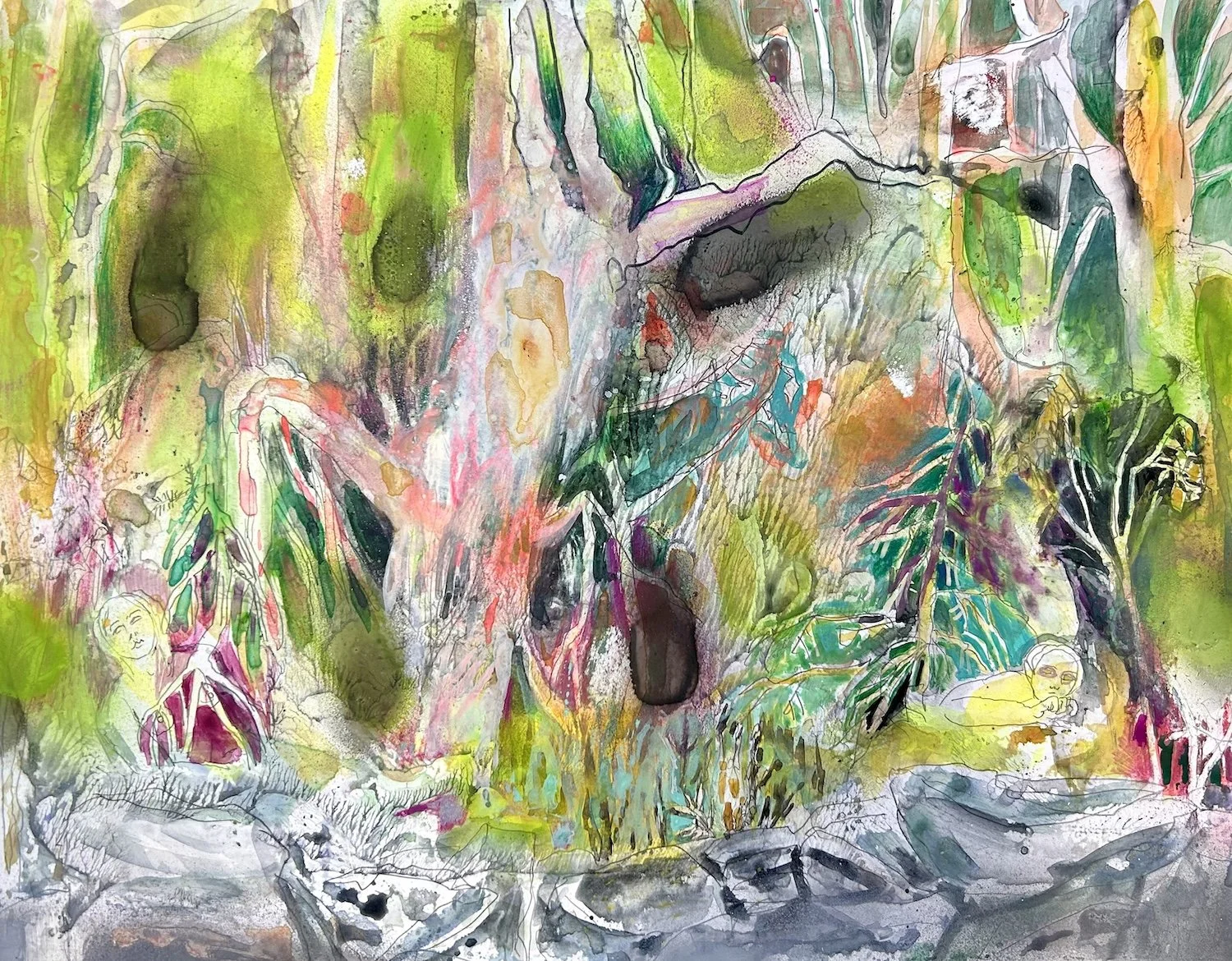
Two Bathers in the Brambles | mixed media on yupo | 11 by 14 inches | 2024

Sculpture in Purple Forest | mixed media | 10 by 8 inches | 2026
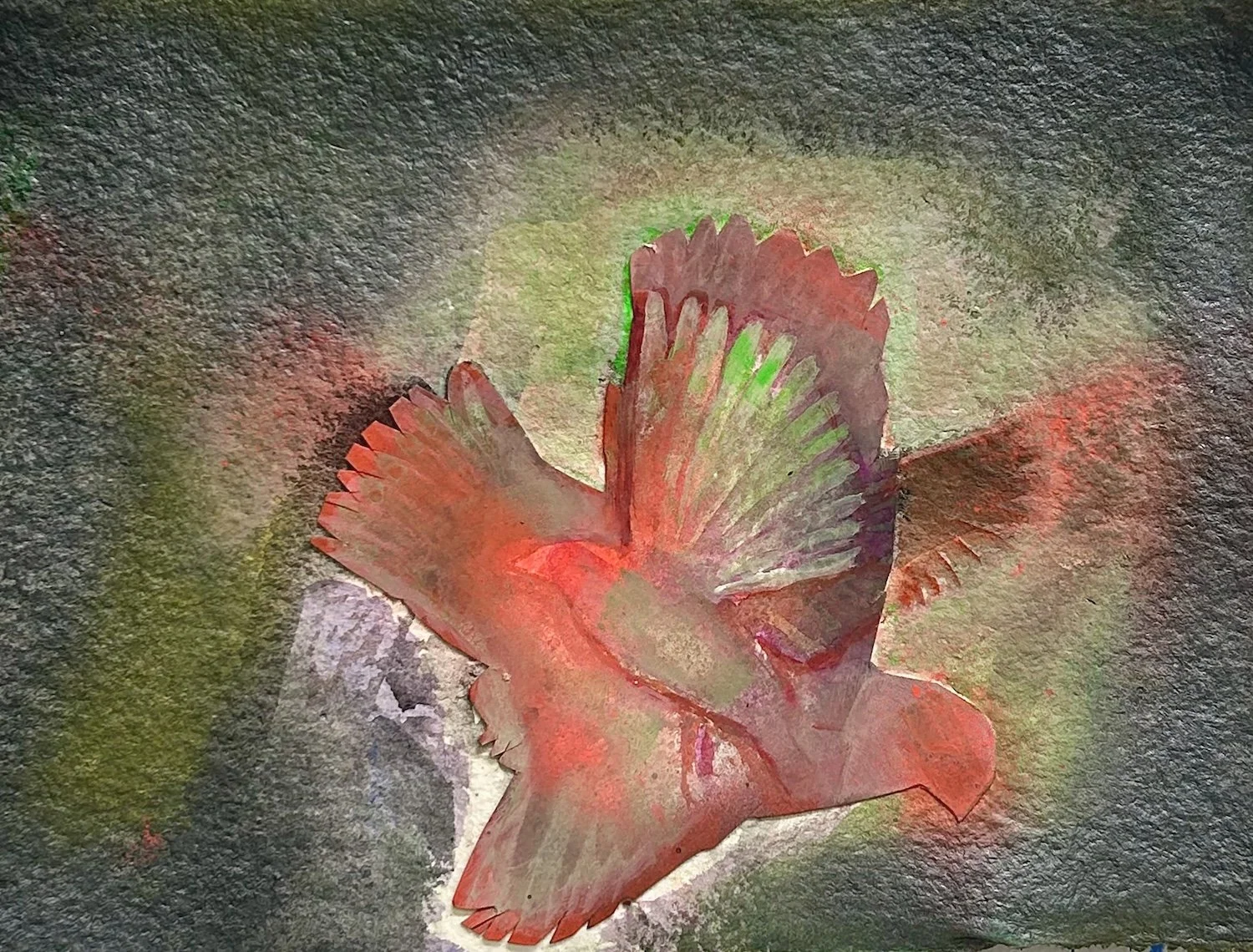
Double Bird | mixed media | 9 by 12 inches | 2026

Siren and Irises | colored pencil | 9 by 12 inches | 2023
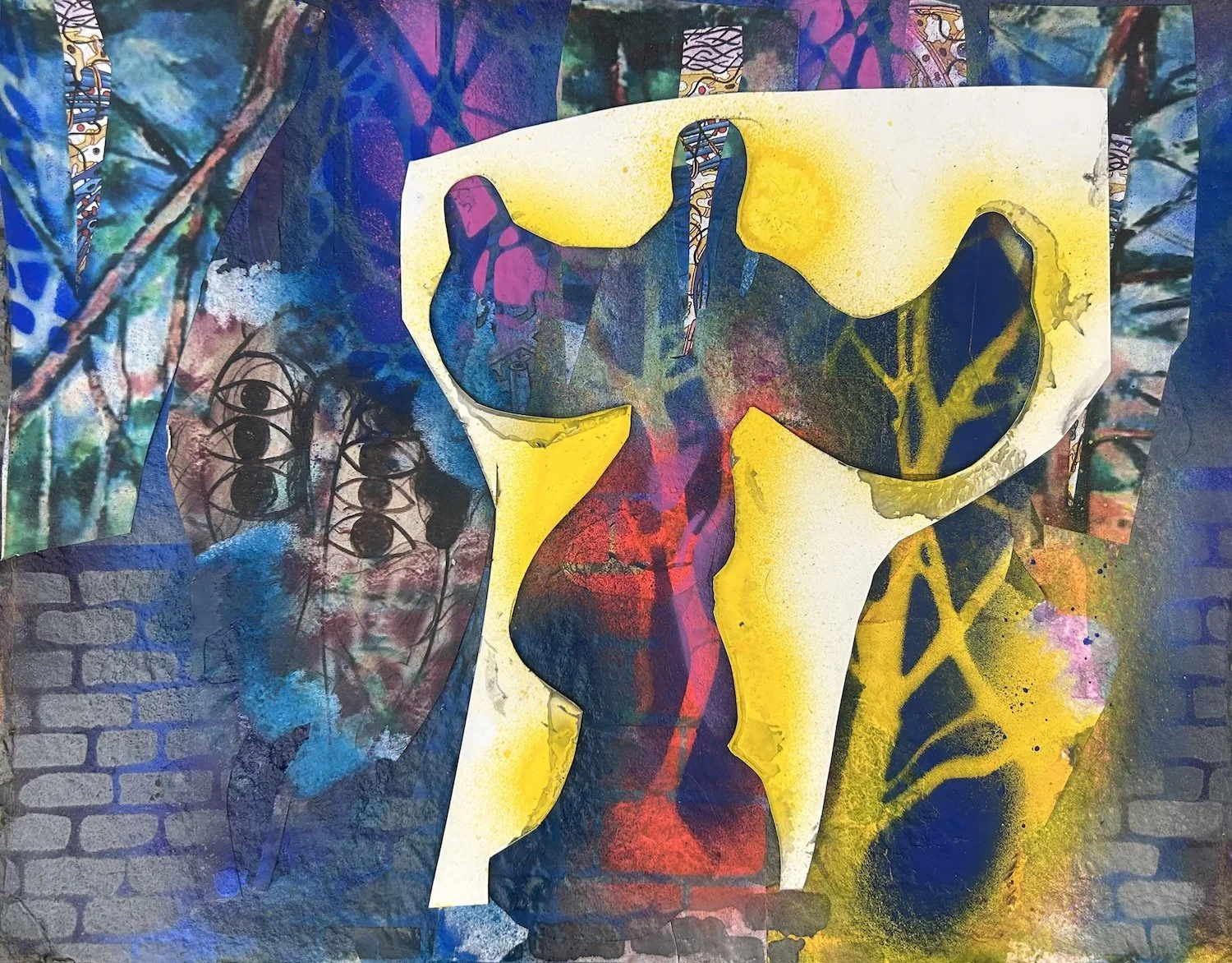
Winged Figure with Eyes | mixed media | 9 by 12 inches | 2026
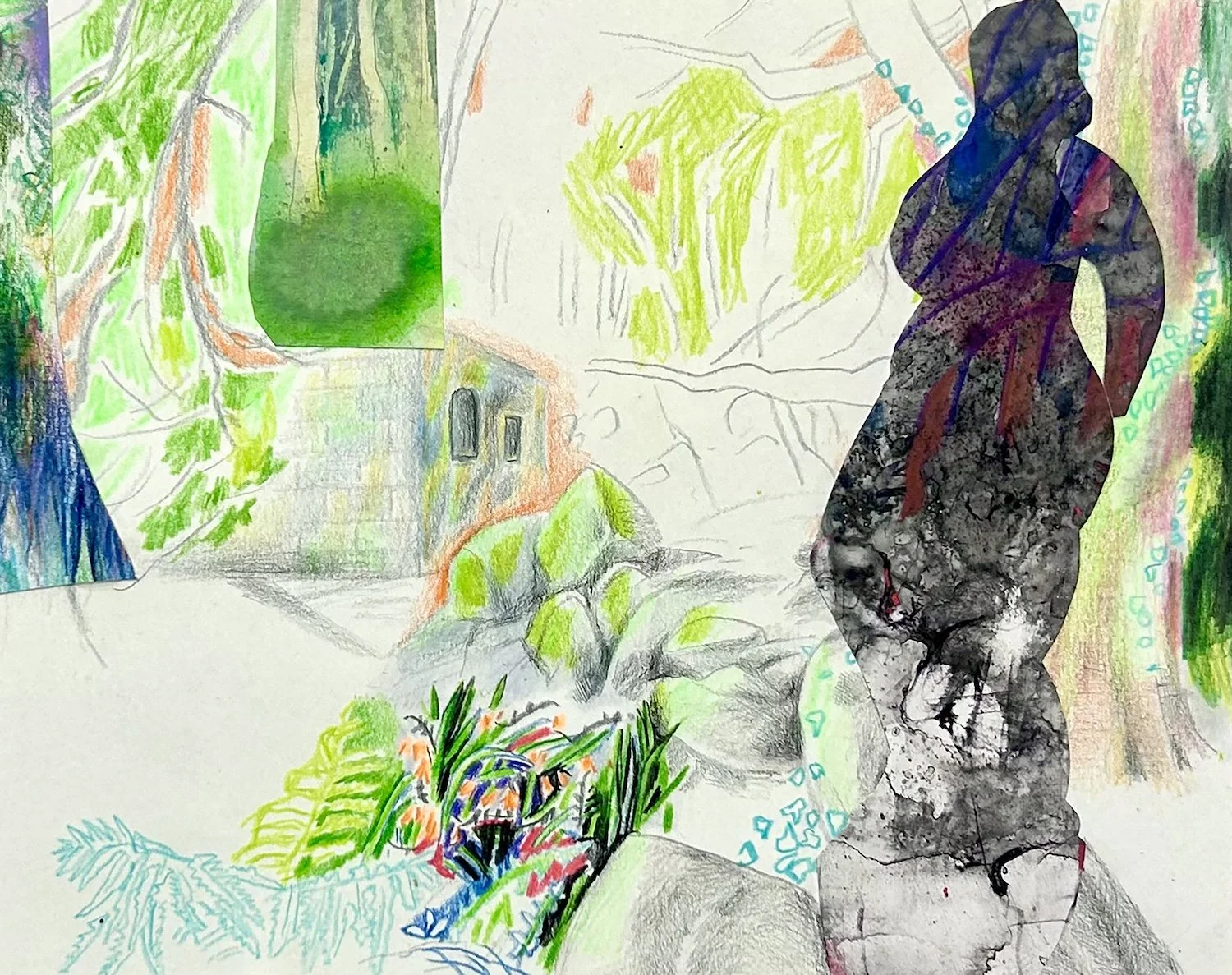
Sculpture and Ruin | mixed media | 8 by 10 inches | 2026
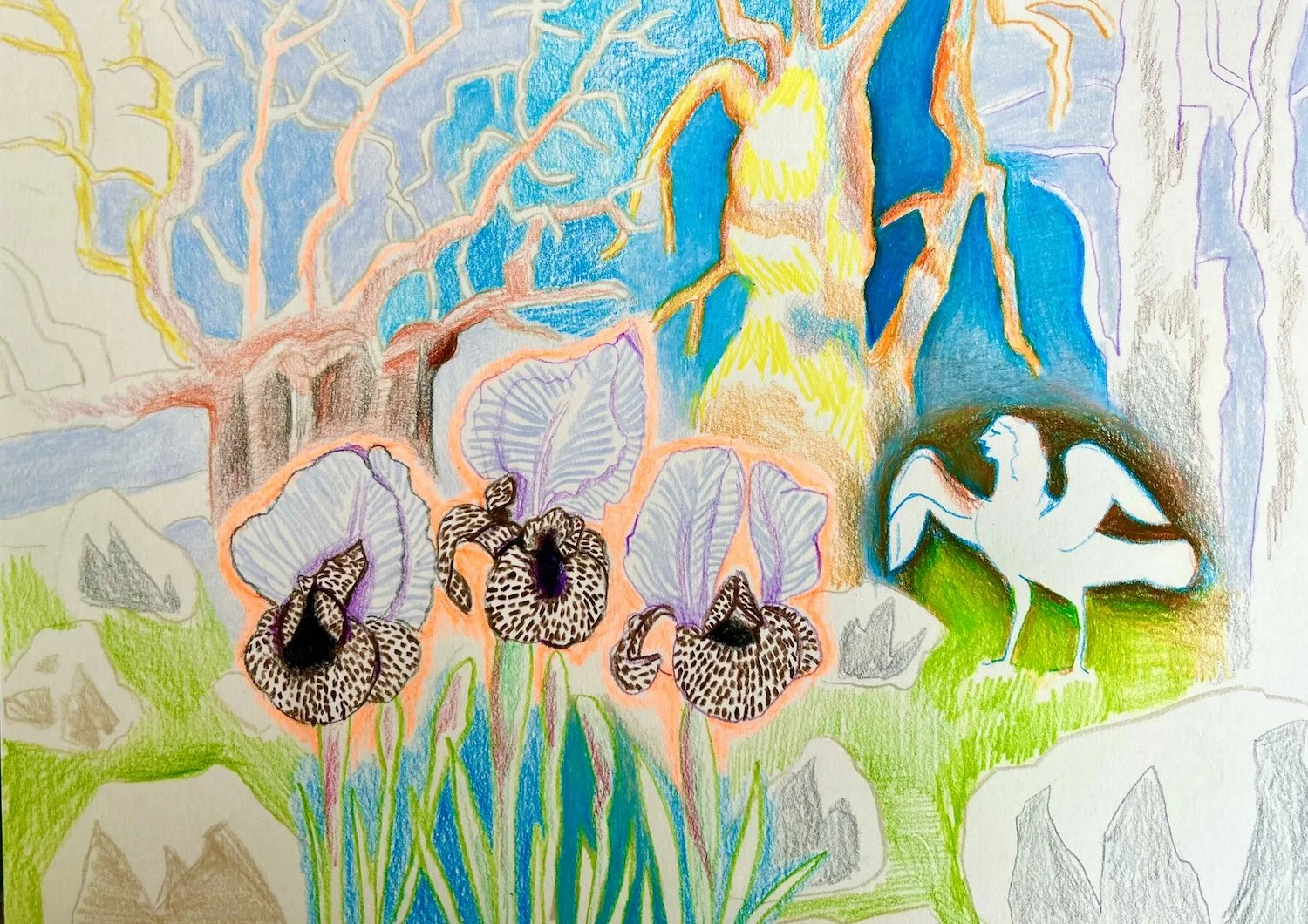
Irises and Harpy | colored pencil | 9 by 12 inches | 2023
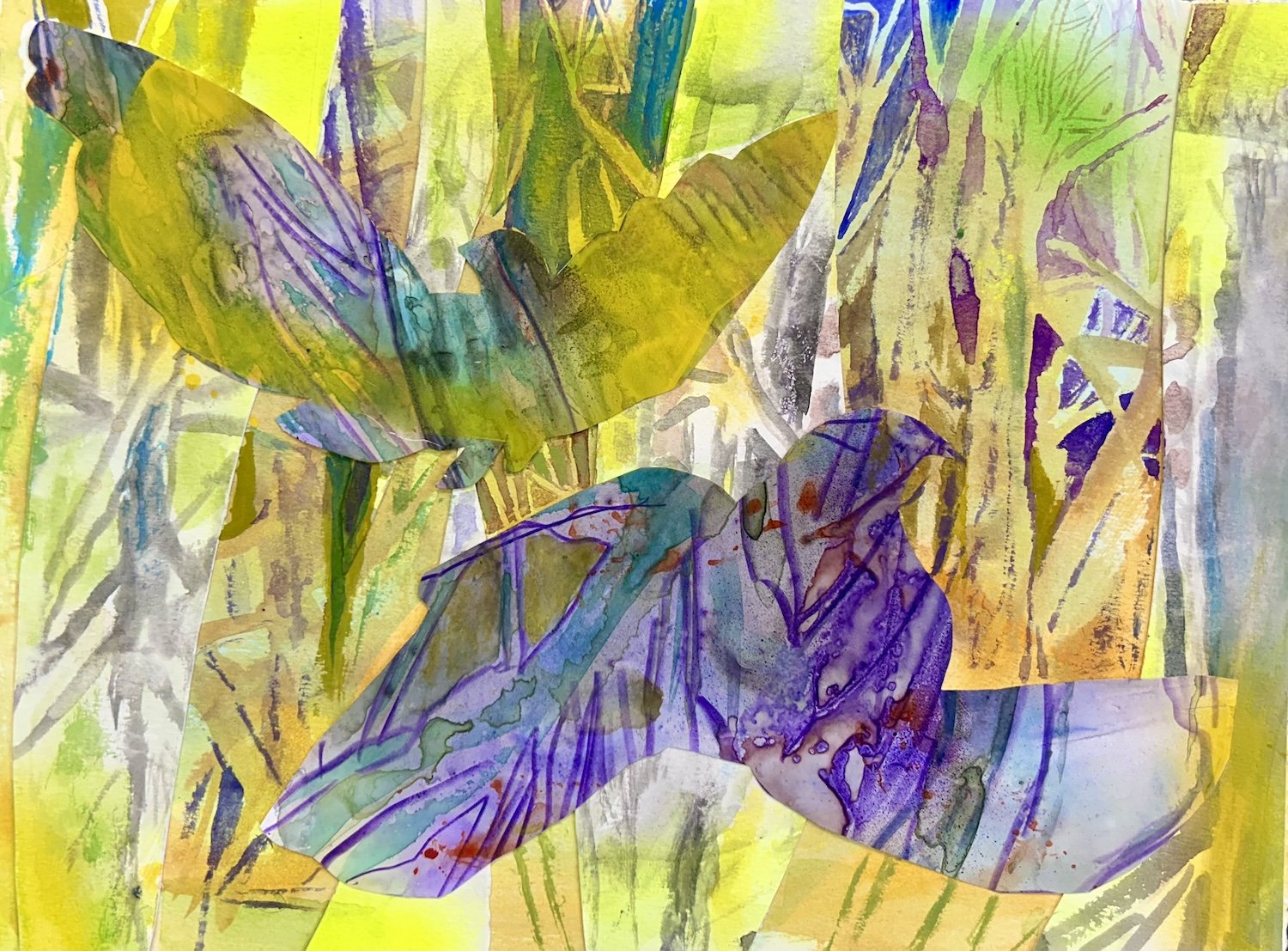
Double Bird II | mixed media | 9 by 12 inches | 2026
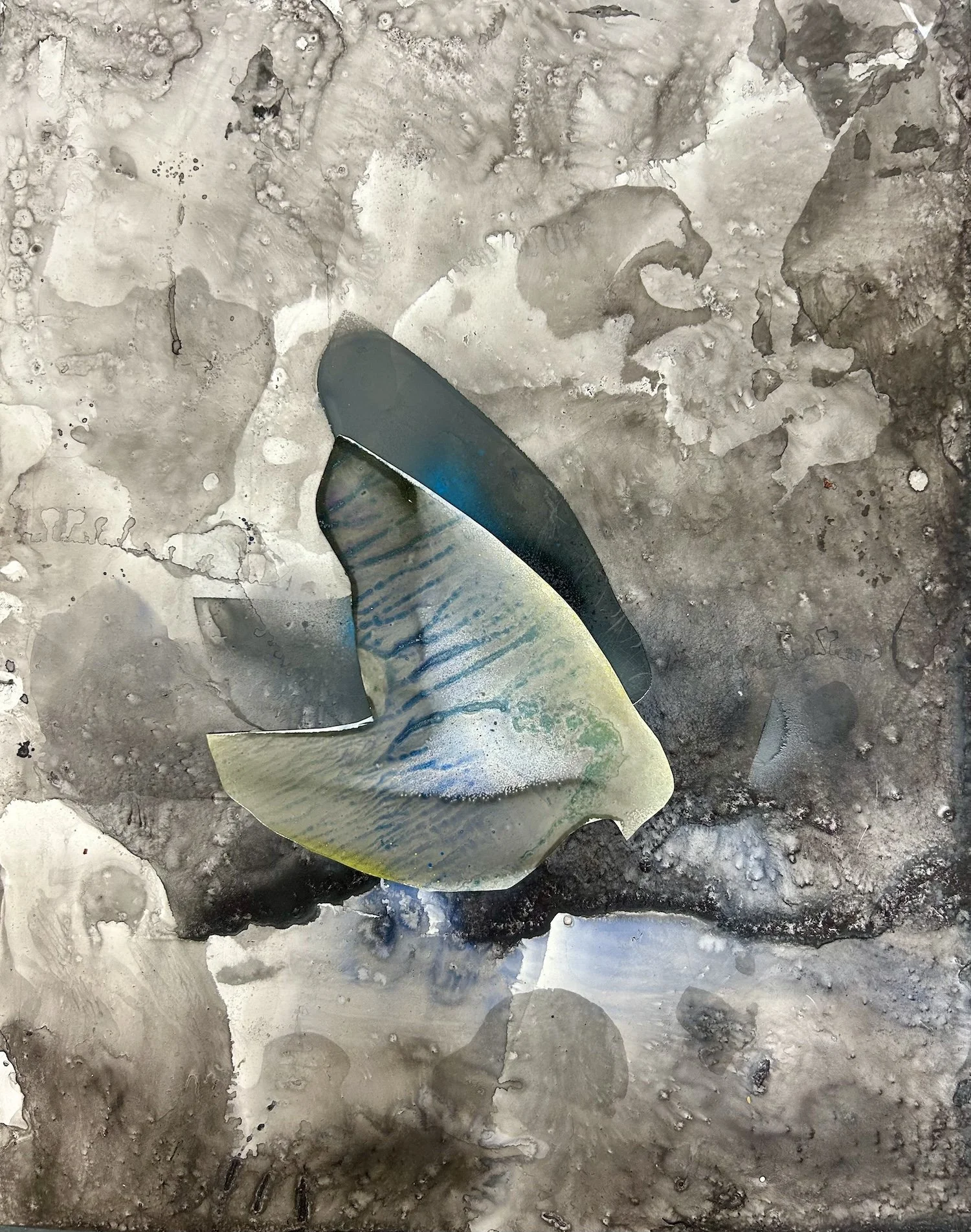
Relic Bird | mixed media | 14 by 11 inches | 2026
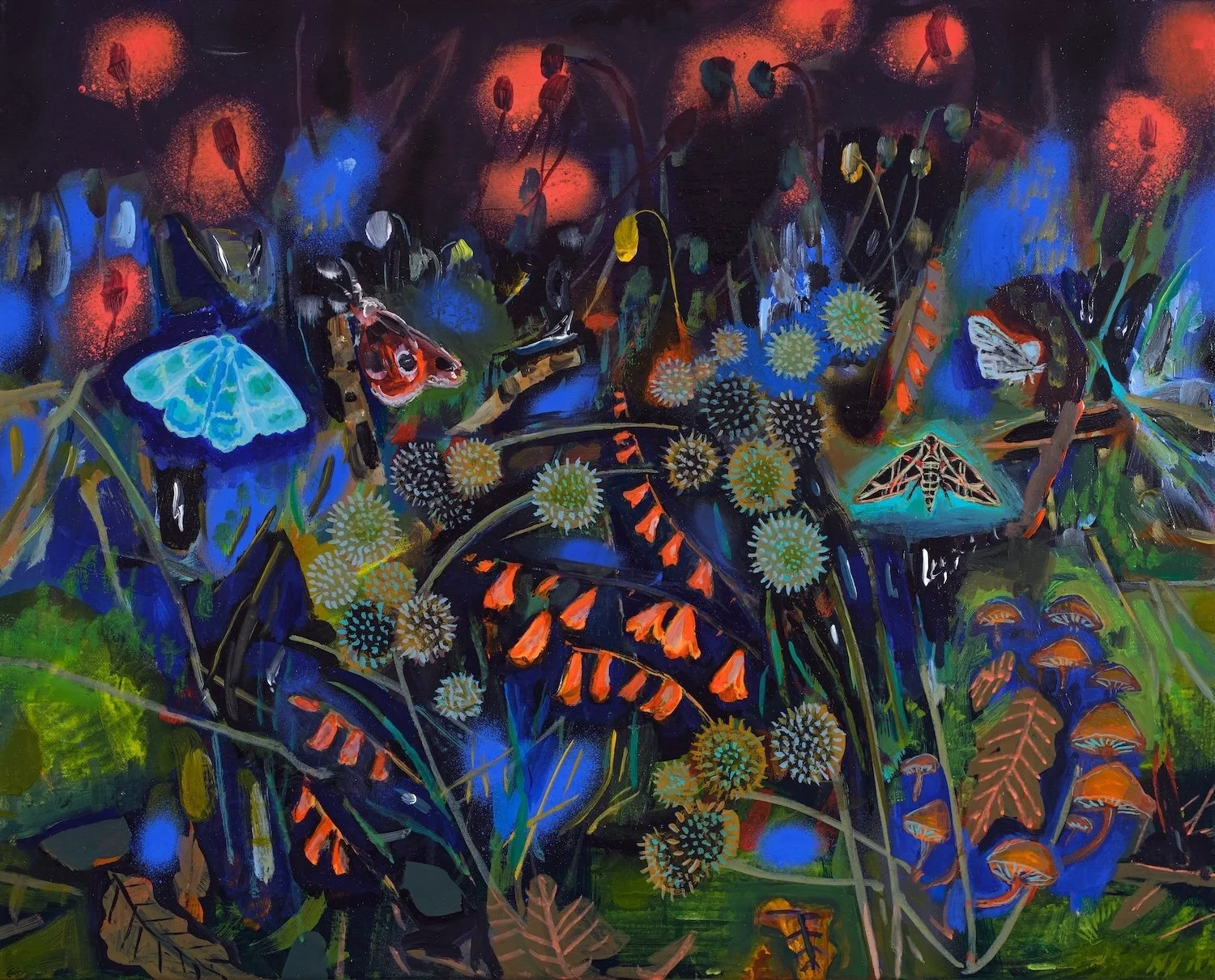
Forest Floor with Moths | 16 by 20 inches | 2025
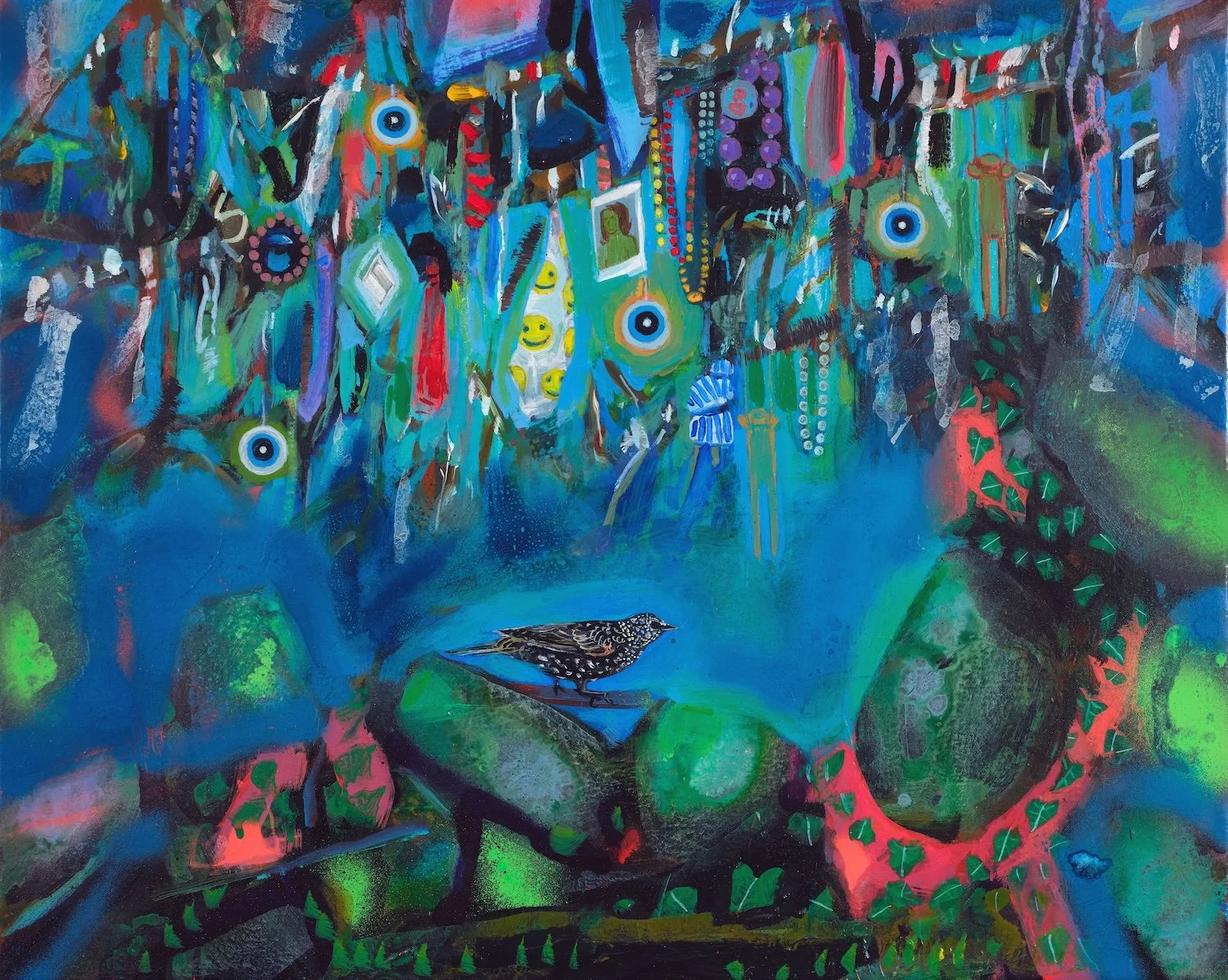
Wish Tree and Starling | 16 by 20 inches | 2026

Forest Floor with Future Ruin and Relics | 48 by 60 inches | 2026
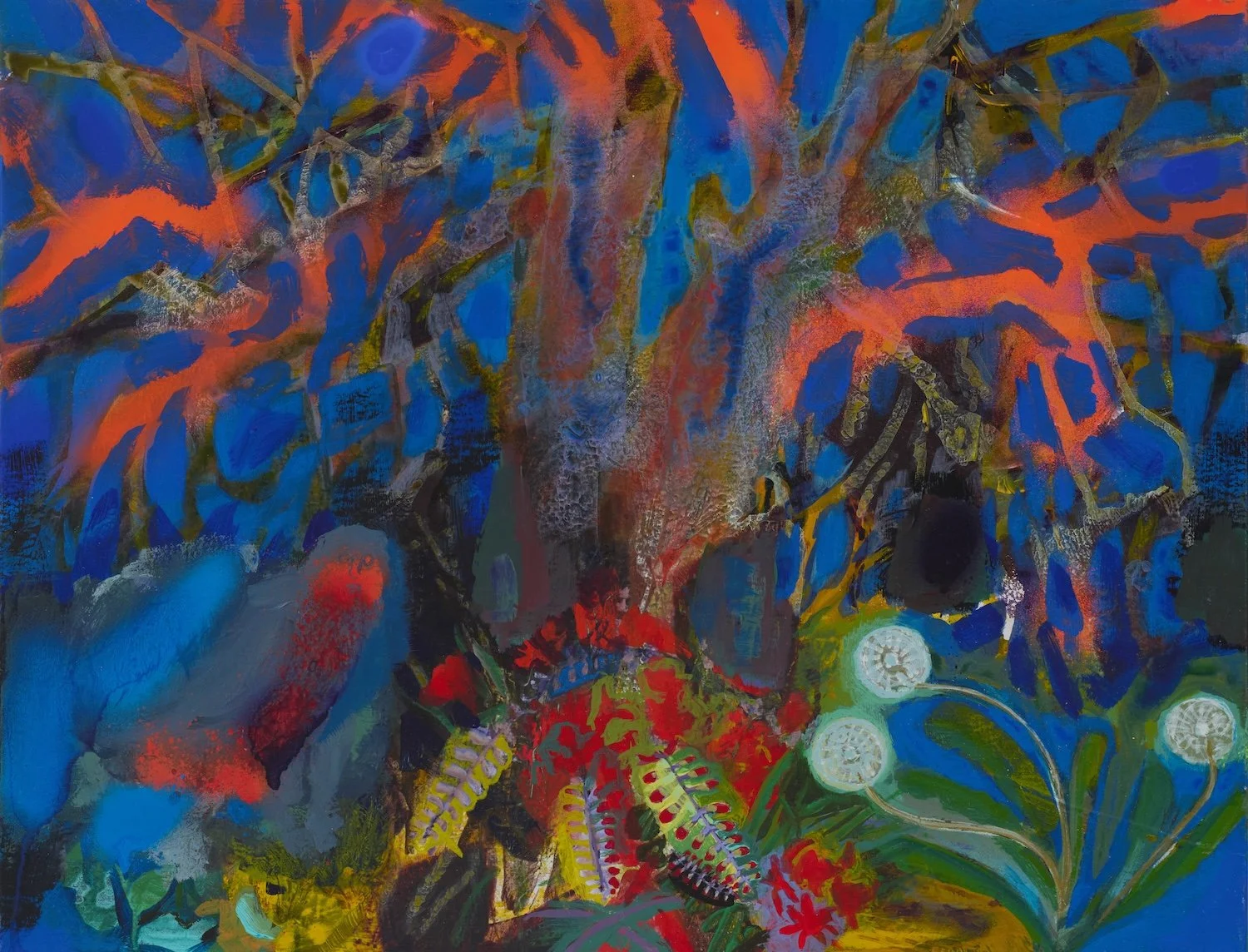
Yew with Dandelions and Crocosmia | 16 by 20 inches | 2025
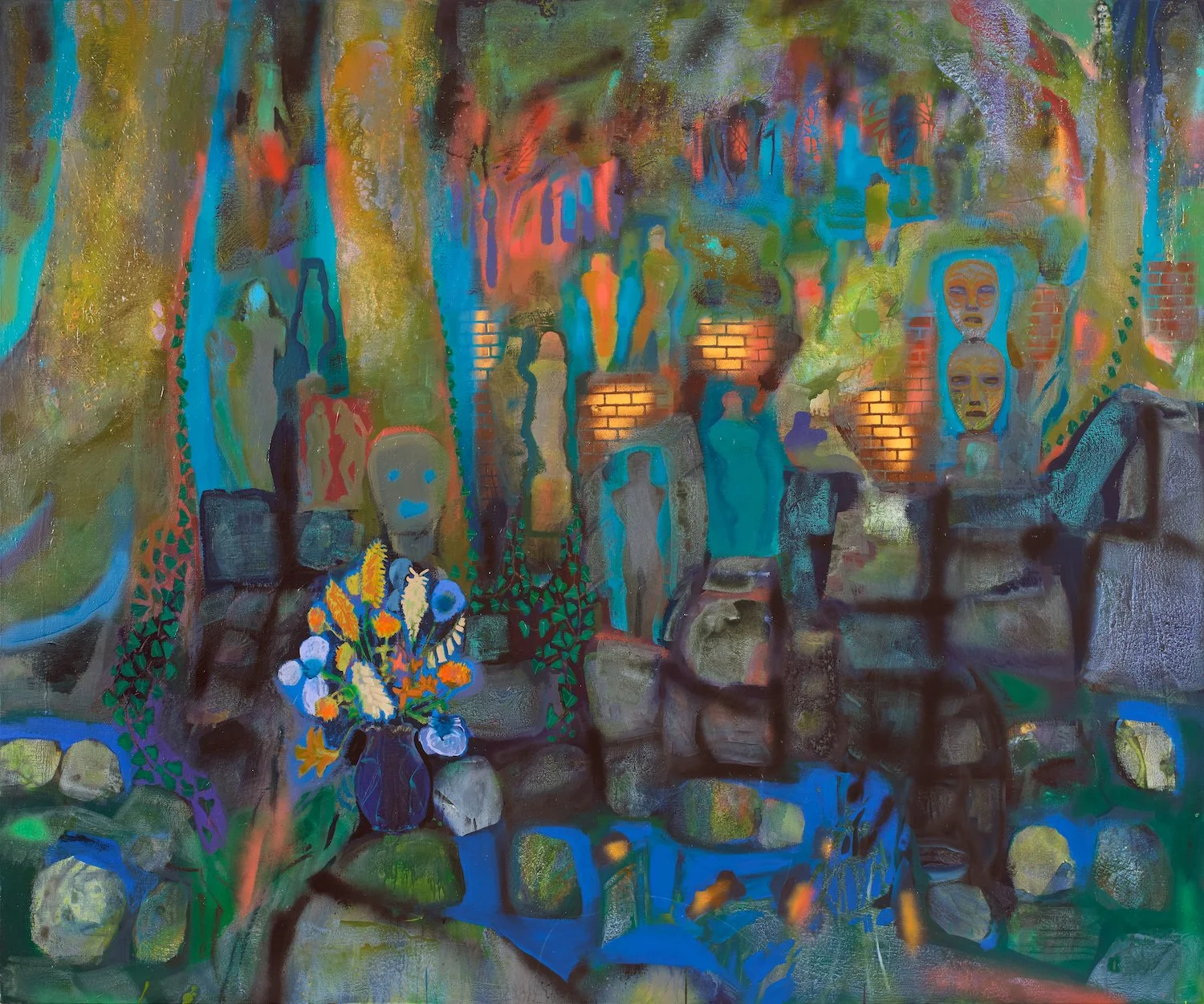
Sanctuary Ruin with Offerings | 60 by 72 inches | 2026
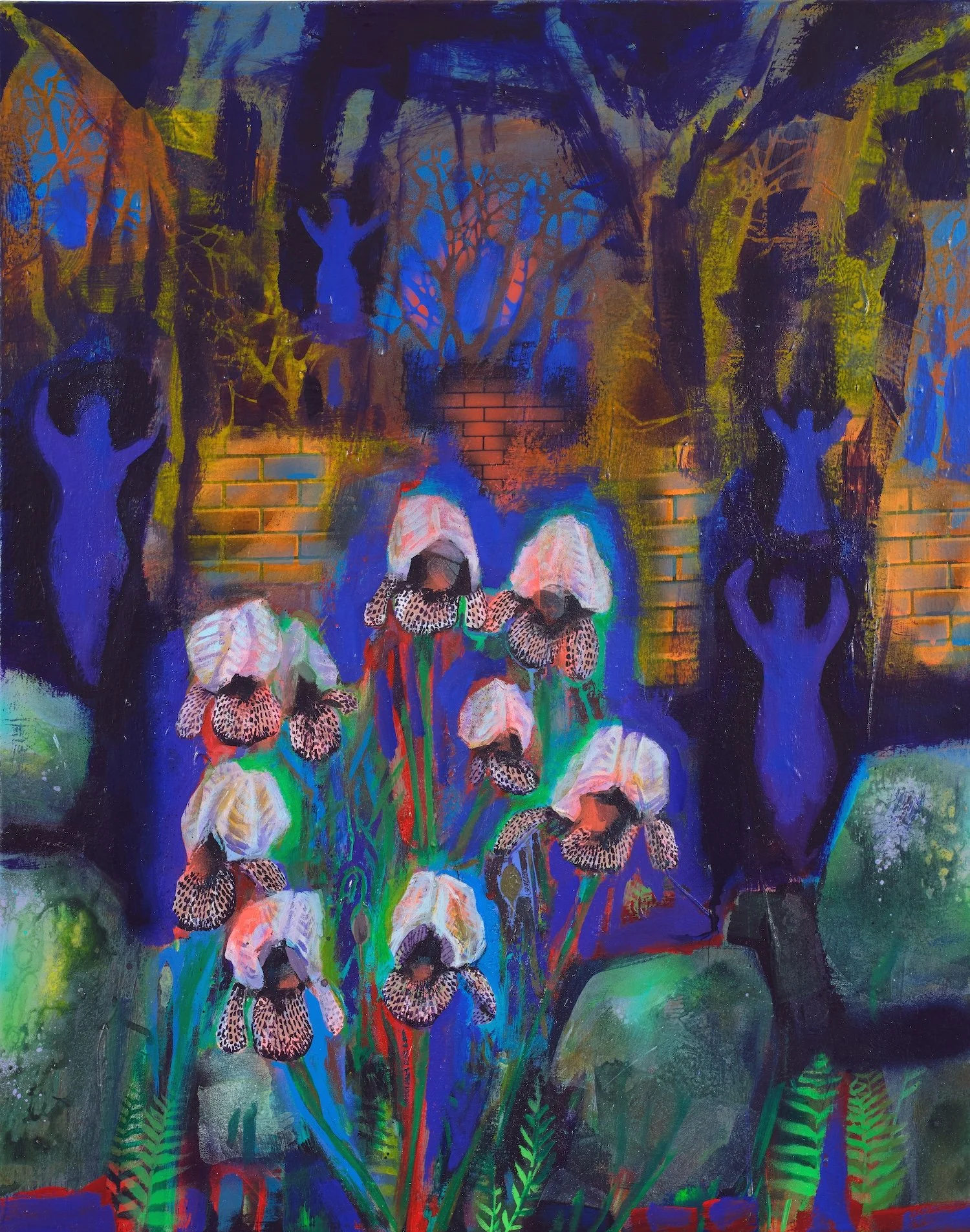
Golan Iris and Purple Figurines | 30 by 22 inches | 2026
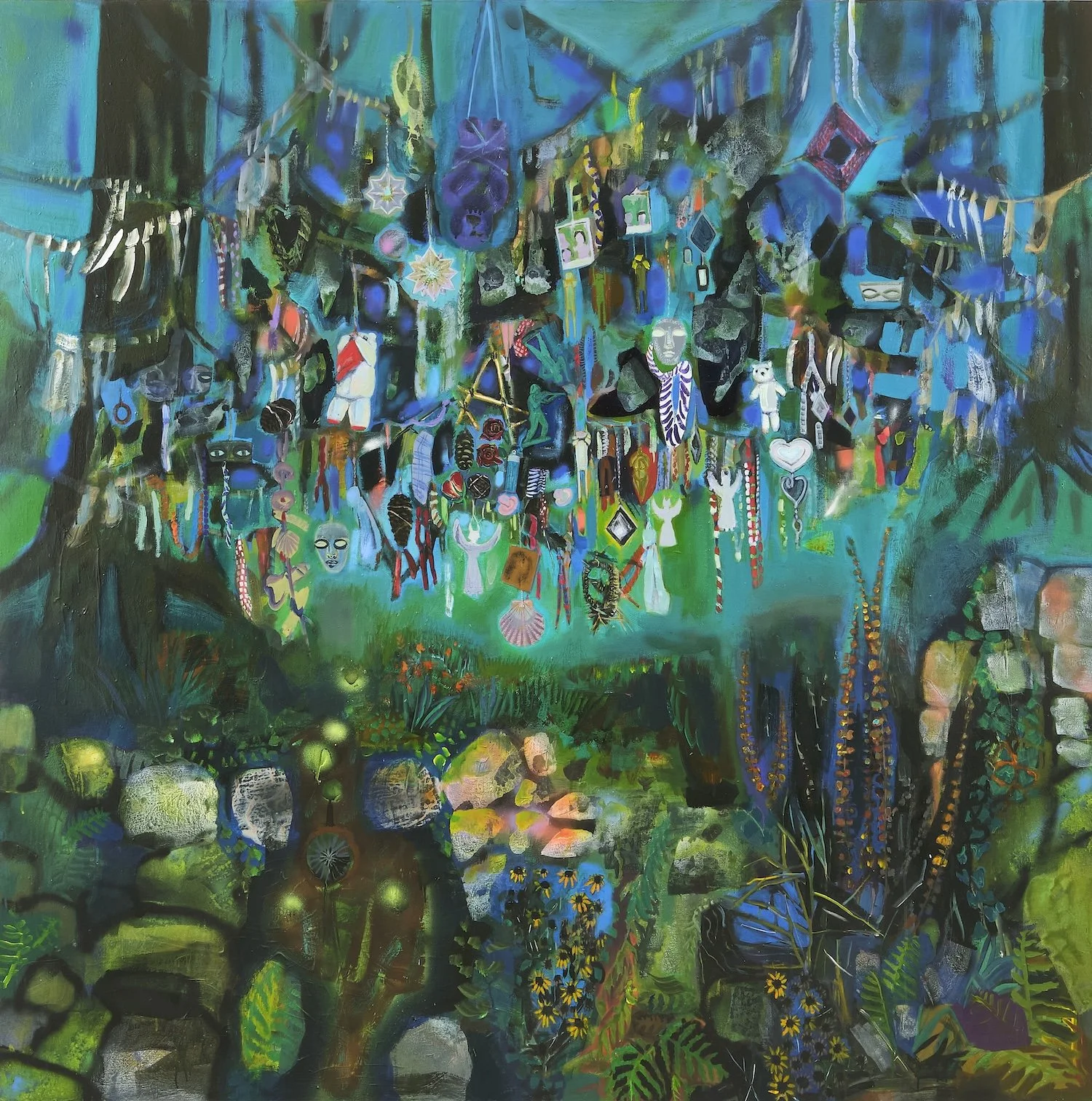
Wish Tree and Ruin | 72 by 72 inches | 2025